

Controllable Layer Decomposition
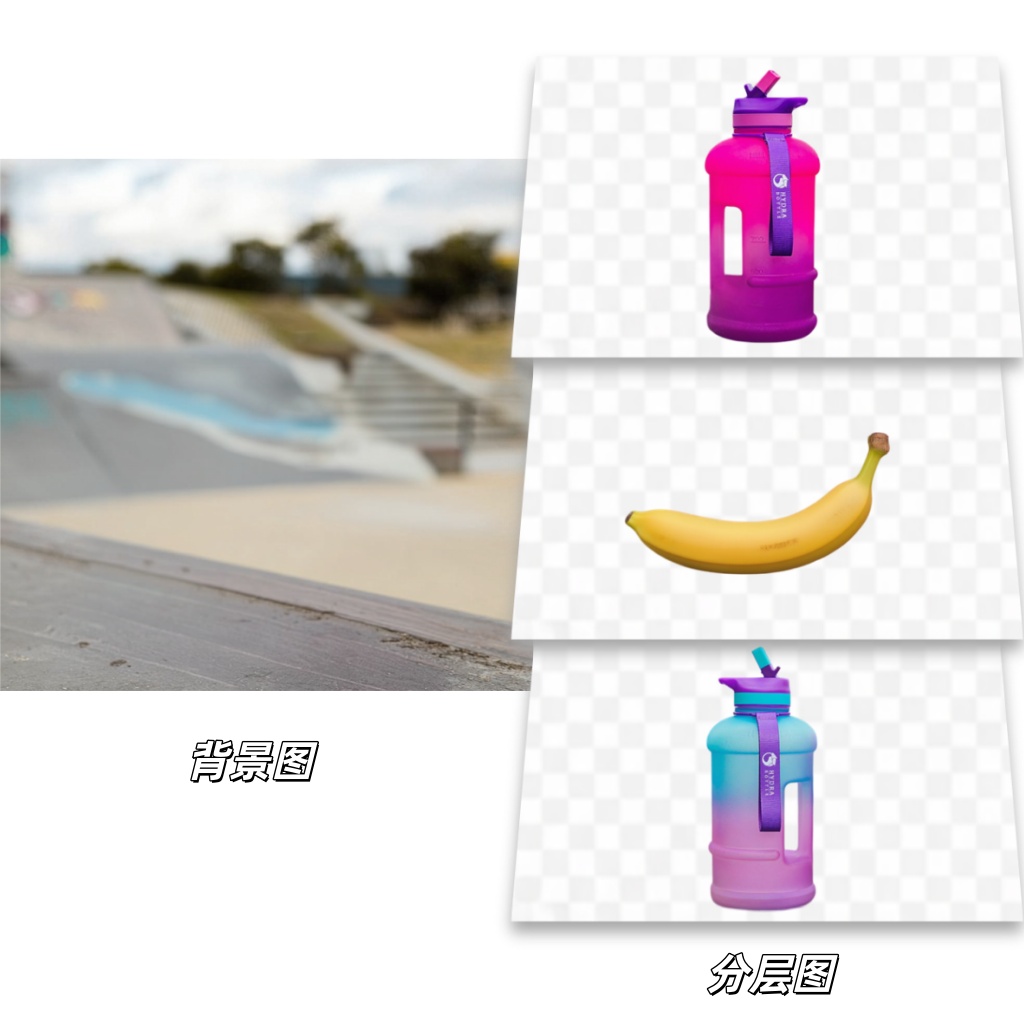
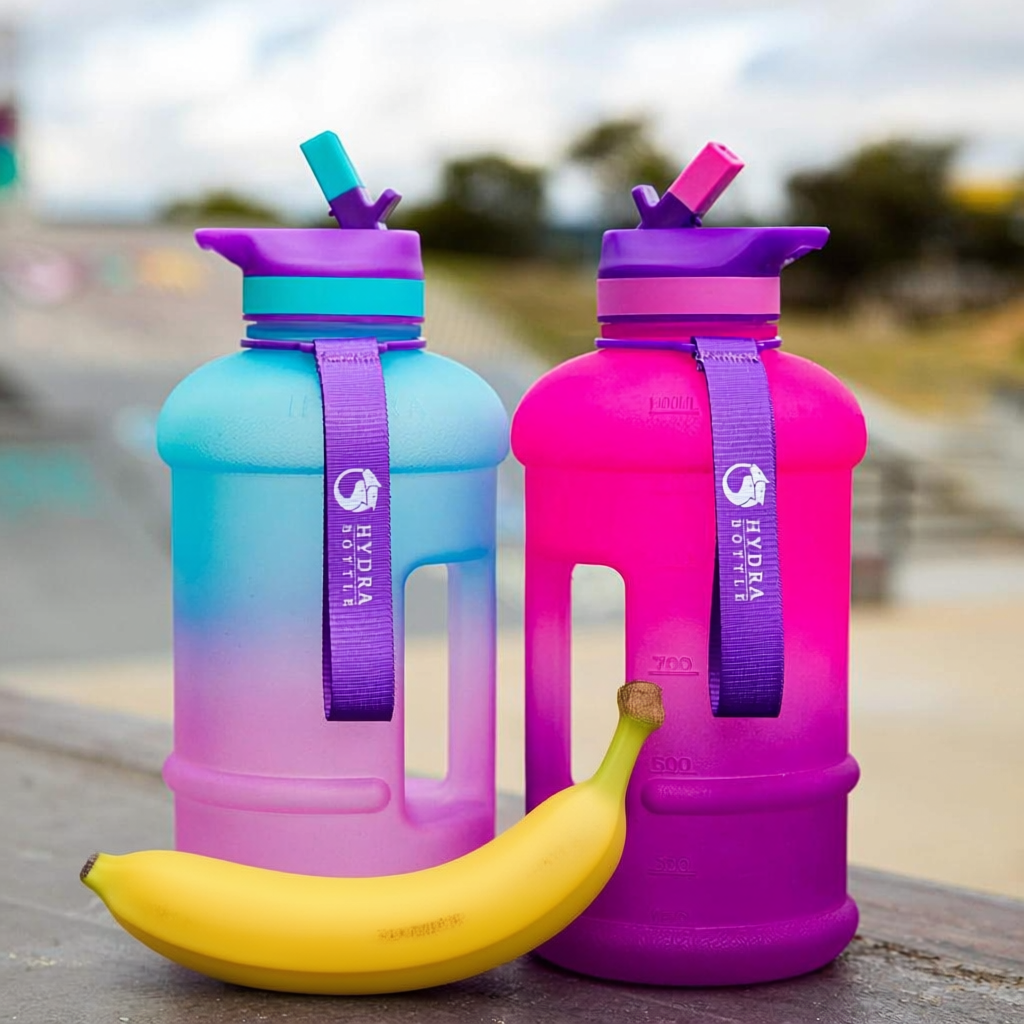
Reveal-Layer replaces full-image blind decomposition with controllable, on-demand extraction. Specify a target boundary using bounding-box coordinates or direct selection to isolate an object as an independent RGBA layer, giving users and developers precise, Photoshop-grade layer control.
Interactive Demo
After you upload an image, the model identifies separable layers automatically. Adjust the layer bounding boxes as needed, then inspect the decomposition results on the right.

Layers
Use Cases
A new way to create and edit digital content
Marketing and Creative
Creative teams can update foregrounds, backgrounds, and text regions independently without redesigning the entire image.
Commercial Visual Design
Ecommerce teams can decompose product imagery into layers for background replacement, layout changes, and reuse across markets and campaigns.
Creative AI Content Editing
Decompose flattened AI-generated images to separate merged elements and make precise local edits, enabling iterative creative refinement.
Video and Animation Production
Extract and manipulate individual elements from video or animation frames to simplify asset cleanup, visual enhancement, editing, and compositing.
Model Capabilities
Move from generated pixels to editable structure by giving AI a true understanding of image layers
Semantic Layer Separation
AI-driven semantic understanding identifies image content and separates subjects, backgrounds, and elements into layers with explicit meaning.
Intelligent Content Completion
Diffusion-based completion reconstructs occluded backgrounds after foreground separation so each layer remains natural when used independently.
User-Defined Layer Decomposition
Users can add or remove bounding boxes, and the model extracts each box as an independent layer for precise, user-directed editing.
Transparent RGBA Output
Each layer is exported as RGBA with a full alpha channel, preserving natural edges when composited or used independently.
Technical Highlights
Better layer separation and occlusion completion in complex scenes
Occlusion-Aware Layer Decomposition Framework
RevealLayer introduces an occlusion-aware decomposition framework for natural scenes. By jointly modeling foreground separation, background restoration, and occlusion completion, it converts a single RGB image into independently editable RGBA layers—moving from a generated result to a structured, editable representation.
Region-Aware and Occlusion-Guided Mechanisms
RevealLayer addresses layer overlap and occlusion recovery with Region-Aware Attention and an Occlusion-Guided Adapter. Each layer attends to its own region while using context to infer hidden content, improving both layer separation and occlusion completion.
Bounding-Box-Driven Controllable Layer Decomposition
Unlike methods that require detailed masks, RevealLayer needs only a simple bounding box. Users specify the target region and the model performs foreground extraction, background restoration, and occlusion completion, combining efficient interaction with practical control.
Natural-Scene Multi-Layer Dataset
RevealLayer introduces RevealLayer-100K, the first large-scale, high-quality multi-layer dataset for natural scenes. It covers complex occlusion, transparent objects, shadows, and reflections, providing a shared data foundation and evaluation standard for general layer decomposition.
Results
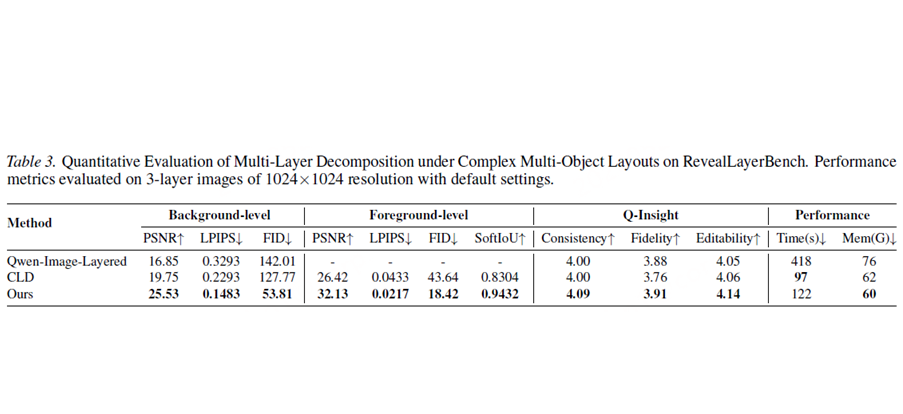
Controllability of Layer Decomposition
Evaluates background restoration, foreground separation, and layer editability in complex multi-object layouts.
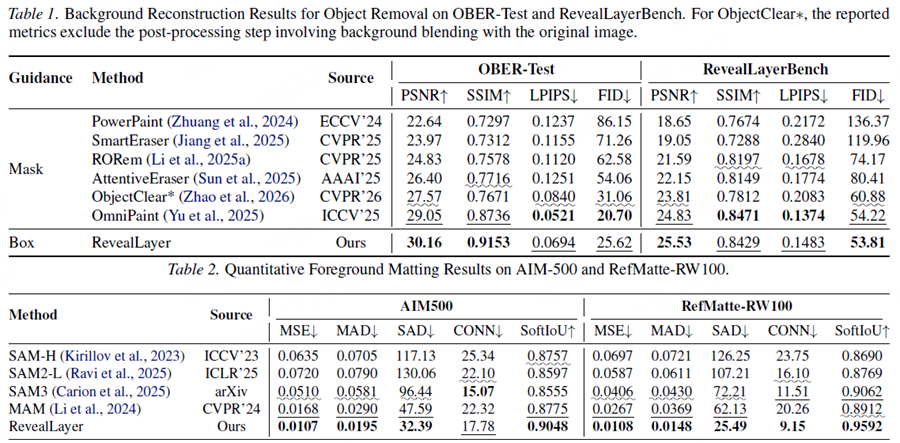
Overall Generation and Restoration Performance
Covers core layer tasks including background reconstruction, object removal, and foreground matting.
Try the Reveal-Layer intelligent layer-decomposition model
Create an account to receive free credit and try controllable layer decomposition.
Get started free